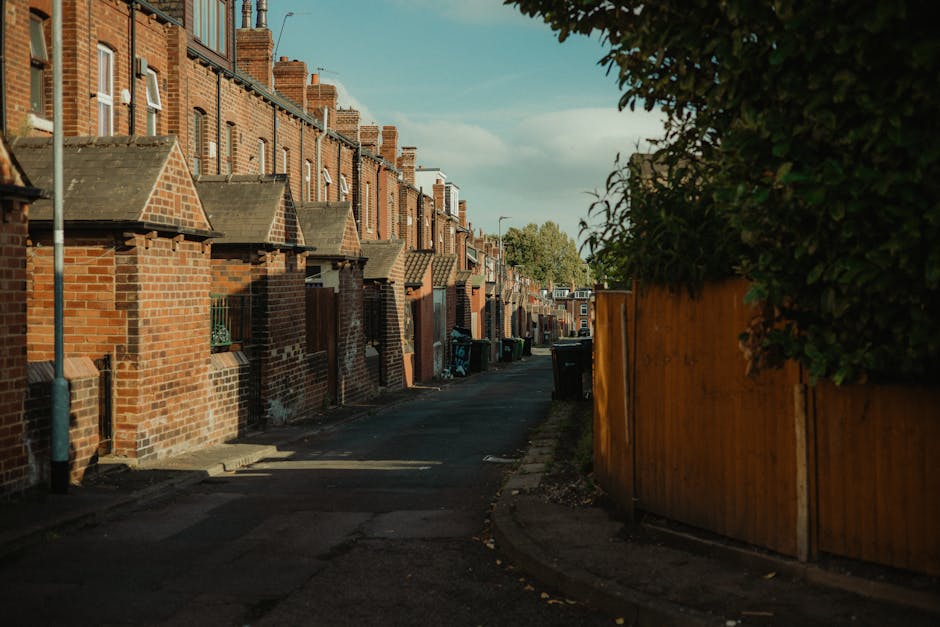
Anerley Hill estate rubbish clearance tips for tight access homes

If you live on Anerley Hill, you probably already know the problem: a staircase that feels narrower than it should, a shared entrance, awkward parking, and that one bulky item that seems to have been placed in the worst possible spot. Clearing rubbish in estate homes with tight access is rarely about brute force. It is about planning, timing, the right equipment, and not making life harder than it needs to be.
These Anerley Hill estate rubbish clearance tips for tight access homes are designed to help you clear space safely, avoid damage, and make sensible choices about what can be removed, reused, recycled, or disposed of. Whether you are tackling a flat clearance, a loft clear-out, old furniture, or general household waste, a little preparation goes a long way. Truth be told, the difference between a smooth job and a stressful one is often just ten minutes of thought at the start.
Below you will find practical guidance for working in tight stairwells, narrow hallways, and shared estate spaces, plus a checklist, comparison table, and the most common mistakes people make when they try to wing it.
Why Anerley Hill estate rubbish clearance tips for tight access homes Matters
Estate properties around Anerley Hill can be brilliant for location and convenience, but they are not always built for easy moving days. Tight access homes tend to have narrow communal corridors, compact staircases, limited parking, awkward corners, and neighbours who quite reasonably do not want the stairwell blocked for hours. That changes how rubbish clearance needs to be handled.
In a normal house with a drive, you can often bring everything straight out to a vehicle. In a tighter estate setting, you may need to think about carrying routes, lifting points, resting spots, and how to avoid scuffing walls or damaging bannisters. One small lapse can become a complaint, a repair bill, or an item stuck halfway down the stairs. Nobody wants that. Nobody.
This matters even more if the rubbish includes heavy furniture, broken appliances, mixed waste, or awkward items like shelving, mattresses, or long pieces of timber. A lot of clearance jobs are not difficult because the volume is huge; they are difficult because access is bad. That is the real issue.
Good planning also helps with sorting. If you know in advance what is going to reuse, what can be recycled, and what needs direct disposal, you can keep the job cleaner and quicker. If you are clearing a whole flat, you might also want to think about related services such as flat clearance or, for wider household jobs, home clearance and house clearance.
How Anerley Hill estate rubbish clearance tips for tight access homes Works
A tight-access clearance usually works best in stages rather than as one big lift-and-go job. The more awkward the building, the more important it is to break the process into manageable parts.
Typically, the process starts with a quick assessment of access. That means looking at door widths, stair turns, lift availability, internal corridors, parking distance, and any restrictions on vehicle stopping or loading. Then you identify the waste types and decide what needs to be removed first. Bulky items often come out before loose bagged waste because they are the hardest to manoeuvre.
Next comes route planning. This is the part people skip, and then regret. You want to know where everything will pass through, where you can pause safely, and which corners need extra care. If an item needs to be dismantled, do that in the room where it sits, not halfway in the hallway. It sounds obvious, but when you are rushing, obvious things get forgotten.
Once the route is clear, the actual clearance can be carried out with the right team size, lifting approach, and vehicle positioning. For estate homes, it is often smarter to use smaller loads more often than to try to force one massive removal. If there is a lot of mixed waste, a broader waste removal approach may be more efficient than trying to handle everything as a single furniture job.
Final sorting should happen before loading if possible. That reduces the chance of mixing items that can be reused or recycled with general rubbish. It also keeps the job tidier for neighbours and building managers, which, let's face it, matters more than some people think.
Key Benefits and Practical Advantages
Clearance in tight-access homes is not just about getting rid of clutter. Done properly, it solves a few problems at once.
- Less damage risk: Careful route planning helps protect walls, doors, lifts, and stair rails.
- Faster job completion: Less backtracking means less time carrying, sorting, and redoing work.
- Better neighbour relations: Quiet, tidy, organised work is far less disruptive in shared estates.
- Improved safety: Fewer improvised lifts and fewer awkward turns reduce the chance of slips or strains.
- More recycling potential: Early sorting makes it easier to separate reusable furniture and recyclable materials.
- Less stress for you: When the plan is clear, the whole thing feels more manageable. Simple as that.
There is also a financial angle. Small mistakes can create hidden costs: damage repairs, extra labour time, repeat visits, or a second van because the first one was packed badly. Good preparation reduces that risk. It does not need to be fancy. Just thoughtful.
For people removing bulky household items, a focused furniture clearance or responsible furniture disposal plan can make a big difference, especially when sofas, wardrobes, or beds have to travel down narrow stairs.
Who This Is For and When It Makes Sense
This approach makes sense for anyone dealing with a property where access is tight, shared, or awkward. In practice, that usually means:
- flat owners and tenants in estate blocks
- landlords preparing a flat for re-letting
- families clearing a relative's home
- people downsizing from a larger flat or maisonette
- homeowners clearing lofts, garages, or storage spaces
- small businesses in converted estate premises
You may also need this type of planning if the rubbish is not huge but is simply hard to move. A single heavy wardrobe can be more of a headache than six bags of mixed waste. Strange, but true.
It also makes sense when you are on a deadline. End-of-tenancy clearances, sale preparations, and pre-refurbishment jobs often have a fixed window. If you have only one afternoon and the bin store is on the other side of the block, careful planning becomes non-negotiable.
People clearing loft spaces in estate homes may also find that loft clearance is better approached as a staged job rather than a single trip. Loft access can be awkward even in larger houses; in estates, it can be doubly awkward. You get the idea.
Step-by-Step Guidance
Here is the most practical way to handle rubbish clearance in a tight-access Anerley Hill estate home.
1. Walk the route before lifting anything
Look from the item to the exit and then to the vehicle point. Check every door, corner, threshold, stair turn, and landing. If anything looks tight, measure it. Do not guess. A tape measure costs less than a scratched wall and a second attempt.
2. Separate the waste into clear groups
Put items into three categories: keep, recycle/reuse, and remove. If you are clearing a full room, this speeds everything up. It also stops you accidentally moving something only to realise later that it should have stayed. That happens more than people admit.
3. Dismantle large items early
If a sofa, wardrobe, bed frame, or shelving unit is too large for the route, dismantle it at the source. Remove legs, doors, drawers, and shelves where you can. Use labelled bags for fittings and screws. Tiny tip, big payoff.
4. Protect the building
Use blankets, corner guards, or temporary protection on sharp furniture edges if needed. In shared estates, it is worth taking five minutes to protect the stairwell rather than apologising later for a chip in the paint.
5. Stage items near the exit, not in the corridor
Do not create a mini warehouse in the hallway. Stage items in the room, then move them in controlled loads. Blocking communal areas can cause frustration fast.
6. Load in the right order
Heavy or awkward items usually go first, then lighter mixed waste around them. If you are working with a vehicle, think like a puzzle solver. Fit the difficult shapes first while you still have space to adjust. It is not glamorous, but it works.
7. Do a final sweep
Check for loose fixings, broken glass, packaging, dust, and small items left behind. Tight-access properties tend to have more overlooked corners, especially behind doors and around radiators. A final sweep is worth it. Always.
Expert Tips for Better Results
Here are the small details that make a clearance job noticeably easier.
- Use two-person handling for awkward items: Even if something is not very heavy, its shape can make it unsafe to carry alone.
- Measure before you move: Door width, stair width, and turning space matter more than people expect.
- Keep one path open: If possible, maintain a clear route for the duration of the job instead of constant shuffling.
- Work during quieter hours: Mid-morning often feels less chaotic than early rush periods, especially in shared blocks.
- Bag small waste before larger items move: Loose rubbish underfoot is a trip hazard and slows everything down.
- Take photos of fragile areas beforehand: Not for drama, just for clarity if anyone asks what the corridor looked like.
One practical observation from tight estates: the cleanest jobs are usually the ones where the team does less carrying than you expect and more prep than you expect. That is not laziness. It is the opposite.
If the job includes access-heavy commercial spaces, a service such as office clearance or business waste removal may follow similar planning principles, just with different waste types and timing pressures.
Expert summary: In tight-access estate homes, the winning formula is almost always this: measure first, dismantle early, protect surfaces, keep routes clear, and load in a controlled order. The less you improvise, the easier the day feels.
Common Mistakes to Avoid
A lot of clearance problems in tight-access homes come from very ordinary mistakes. Nothing dramatic. Just small decisions that snowball.
- Skipping the access check: If you do not measure, you are guessing. Guessing is risky in narrow spaces.
- Leaving items in communal areas: This can frustrate neighbours and create hazards.
- Forcing oversized furniture through: If it does not fit, do not make it fit. Dismantle it.
- Mixing waste types too early: Sorting becomes messy when everything ends up in one pile.
- Underestimating stair turns: Straight lengths are rarely the problem; corners are.
- Ignoring building rules: Some estates have loading expectations, lift bookings, or quiet-hour concerns. Check first.
- Trying to do everything alone: One person can manage a lot, but estate clearance is often a two-person or team job.
And yes, people still try to carry a wardrobe down a narrow stairwell on their own. We have all seen that moment where confidence meets geometry and loses. Best to avoid it.
Tools, Resources and Recommendations
You do not need a van full of specialised gear, but the right basics make the job far safer and tidier.
- Tape measure: For doors, corridors, stair widths, and furniture dimensions.
- Strong gloves: Useful for sharp edges, splinters, and dusty items.
- Furniture sliders or lifting straps: Helpful for moving items without dragging them.
- Blankets or protective covers: Good for walls, doorframes, and polished furniture.
- Heavy-duty bags: Better for mixed waste, textiles, and light breakables.
- Labels or marker pens: Handy when dismantling furniture or sorting keep/recycle/remove piles.
- Bin bags and cartons: Useful for the small stuff that otherwise scatters everywhere.
For larger clear-outs involving bulky sofas, mattresses, cabinets, or mixed household waste, it can help to compare clearance choices against your actual access constraints rather than just your item list. If the main challenge is volume, a broader home clearance may suit you. If the challenge is specific furniture, then a more focused furniture clearance approach may be cleaner.
Recycling also deserves a mention. If you can separate reusable furniture, scrap metal, cardboard, and general waste early, you make the entire process smoother. The page on recycling and sustainability is a useful reference point for the mindset behind responsible disposal, even if the exact handling depends on the item.
Law, Compliance, Standards, or Best Practice
When rubbish clearance involves shared estate space, safety and good practice matter just as much as speed. You do not need to become a legal expert, but you should know the basic expectations.
In the UK, household and commercial waste should be handled carefully, transferred to appropriate facilities, and kept separate from anything that could create risk, contamination, or nuisance. For estate homes, that usually means avoiding blocked fire routes, keeping common areas clear, and making sure waste is not dumped in bin stores or corridors without permission.
If you are using a clearance provider, it is sensible to check how they approach health and safety, insurance, and responsible handling. A trusted operator should be able to explain their approach plainly. If that explanation feels vague, that is worth noticing. No need to be difficult, just careful.
For jobs involving dismantling or lifting heavy items, good manual handling practice matters. Lift with care, keep loads manageable, and do not twist under weight. Common sense? Yes. But common sense is often what gets forgotten when a hallway is tight and everyone is trying to move quickly.
If you want to understand service standards and company expectations a little better, it can also help to review pages such as health and safety policy, insurance and safety, and terms and conditions. They give useful context about how a professional service should work.
Options, Methods, and Comparison Table
Not every tight-access clearance needs the same approach. The right method depends on the type of waste, the amount involved, and how awkward the building is.
| Method | Best for | Pros | Watch outs |
|---|---|---|---|
| DIY clearance | Small loads, light waste, easy stair access | Cheaper upfront, flexible timing | Time-consuming, lifting risk, vehicle logistics |
| Assisted clearance | Bulky items, mixed waste, tighter stairwells | Safer, quicker, less strain | Needs coordination and access planning |
| Full-service house or flat clearance | Whole-property clear-outs, time-sensitive jobs | Efficient, organised, less stress | May be more than you need for a small job |
| Targeted furniture removal | Sofas, wardrobes, beds, one-off bulky items | Simple and focused | Not ideal if waste is mixed or widespread |
| Specialist waste removal | General rubbish, mixed items, varied materials | Flexible, practical for awkward loads | Sorting still matters if recycling is a goal |
The honest answer is that there is no single best method. A one-room clear-out in an estate flat may be perfectly manageable with a targeted approach. A full household clearance with a tight staircase and no lift is another matter entirely. Different job, different rhythm.
Case Study or Real-World Example
Imagine a second-floor estate flat near Anerley Hill with a narrow entrance hall, a tight stair turn, and a heavy two-seater sofa that has seen better days. The occupant wants the flat cleared before a handover the next day. There is also a chest of drawers, several bagged items, and a couple of old kitchen chairs.
The first instinct might be to drag the sofa out and "see how it goes". That would be a mistake. Instead, the sensible route is to measure the stair turn, remove loose cushions and legs, and check whether the sofa frame can be split further. The drawers are removed first, then the smaller items are bagged and staged. Floor protection is placed at the tightest points. The sofa comes out last, with two people guiding it slowly around the corner.
The result is not dramatic. That is the point. The hallway stays intact, the neighbours are not disturbed for long, and the flat is cleared without a scramble. A bit boring, perhaps. But boring is good when you are trying to avoid damage.
In a similar situation, a resident might decide a full flat clearance service is the smarter option, especially if the access is too tight for repeated lifting or if the property has multiple bulky items. That is often the point where expertise pays for itself in saved time and reduced hassle.
Practical Checklist
Use this before you start. It keeps the job grounded.
- Measure doorways, stair turns, and corridor widths
- Identify any lift bookings, loading restrictions, or building rules
- Sort items into keep, recycle, and remove
- Dismantle furniture where needed before moving it
- Protect walls, corners, and floors at tight contact points
- Keep communal spaces clear and tidy
- Use two people for awkward or heavy items
- Load the vehicle in a sensible order
- Check for sharp objects, glass, or loose screws
- Do a final sweep of every room and hallway
If you are working with a garage, garden, or storage area alongside the main property, those spaces may need a separate plan. The same basic principle applies, though the waste type changes. A cluttered garage, for example, often needs a very different approach from indoor household rubbish, and a garage clearance can save a lot of back-and-forth.
Conclusion
Anerley Hill estate rubbish clearance in tight-access homes is all about making smart choices before the heavy lifting begins. Measure first, sort early, protect the building, and keep the route clear. That is the real recipe. Not glamorous, but effective.
Whether you are clearing a single awkward sofa or dealing with a full estate flat, a calm, organised approach will almost always save time, reduce stress, and protect your home from avoidable damage. And if the job looks bigger than it first appeared, that is completely normal. Tight access has a way of doing that.
With the right plan, even a cramped stairwell and a pile of mixed rubbish can be handled without chaos. One careful step at a time.
Get a free quote today and see how much you can save.
Frequently Asked Questions
What makes estate rubbish clearance harder in tight-access homes?
The main challenge is not usually the amount of rubbish; it is the route out. Narrow stairs, sharp corners, shared corridors, and limited parking can make even a small job awkward.
Should I dismantle furniture before clearance?
Yes, if there is any doubt about whether it will fit safely through the route. Removing legs, doors, or shelves can make a big difference and reduce the risk of damage.
How do I protect walls and bannisters during removal?
Use blankets, corner protection, and careful lifting. Keep items controlled at all times, especially around stair turns and door frames.
Is it better to clear everything in one go?
Not always. For tight-access homes, staged removal is often safer and easier. Heavy items usually come first, followed by smaller mixed waste.
What if I live in a flat with no lift?
Then planning becomes even more important. Measure the route, reduce item size where possible, and avoid carrying more than is safe. A full flat clearance may be the most practical option.
Can rubbish be left in communal hallways while I sort it?
It is best not to. Shared spaces should stay clear for safety and courtesy reasons, and some buildings have rules against blocking them.
How do I know whether I need furniture clearance or full waste removal?
If the main items are bulky household pieces like sofas or wardrobes, furniture clearance may be enough. If the load includes mixed rubbish, broken items, and general waste, a broader waste removal approach is often better.
What should I sort out before a clearance team arrives?
Measure access, identify bulky items, separate anything you want to keep, and make sure there is a clear route to the exit. That saves time and avoids confusion.
Are tight-access clearances more expensive?
They can be, depending on the time, labour, and complexity involved. The access itself is often the factor that changes the effort required, so it is sensible to ask for a clear quote after describing the layout.
What happens to the items after they are collected?
That depends on the type of waste and its condition. Reusable items may be diverted for reuse, while recyclable materials and general waste are handled separately where possible.
Can I handle a small estate clearance myself?
Yes, if the waste is light, the access is manageable, and you are comfortable with the lifting. If anything is bulky, heavy, or awkward, getting help is usually the safer choice.
What is the biggest mistake people make with tight-access rubbish clearance?
Trying to move items without checking the route first. A few minutes of planning can prevent a lot of stress, and sometimes a lot of swearing too, which is probably best avoided in a shared building.
If you are comparing service options or want to understand how a professional team should work, it can also be useful to review the company background via about us, and if you are ready to ask specific questions, use the information on contact us and pricing and quotes pages.